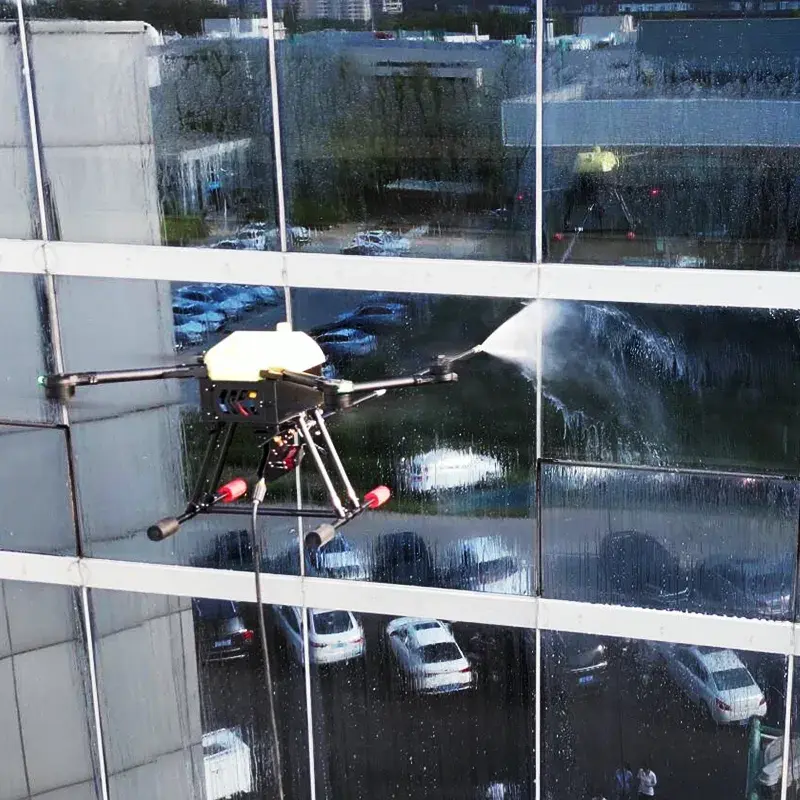
Aerial facade cleaning
Technical drone cleaning · Barcelona and Catalonia

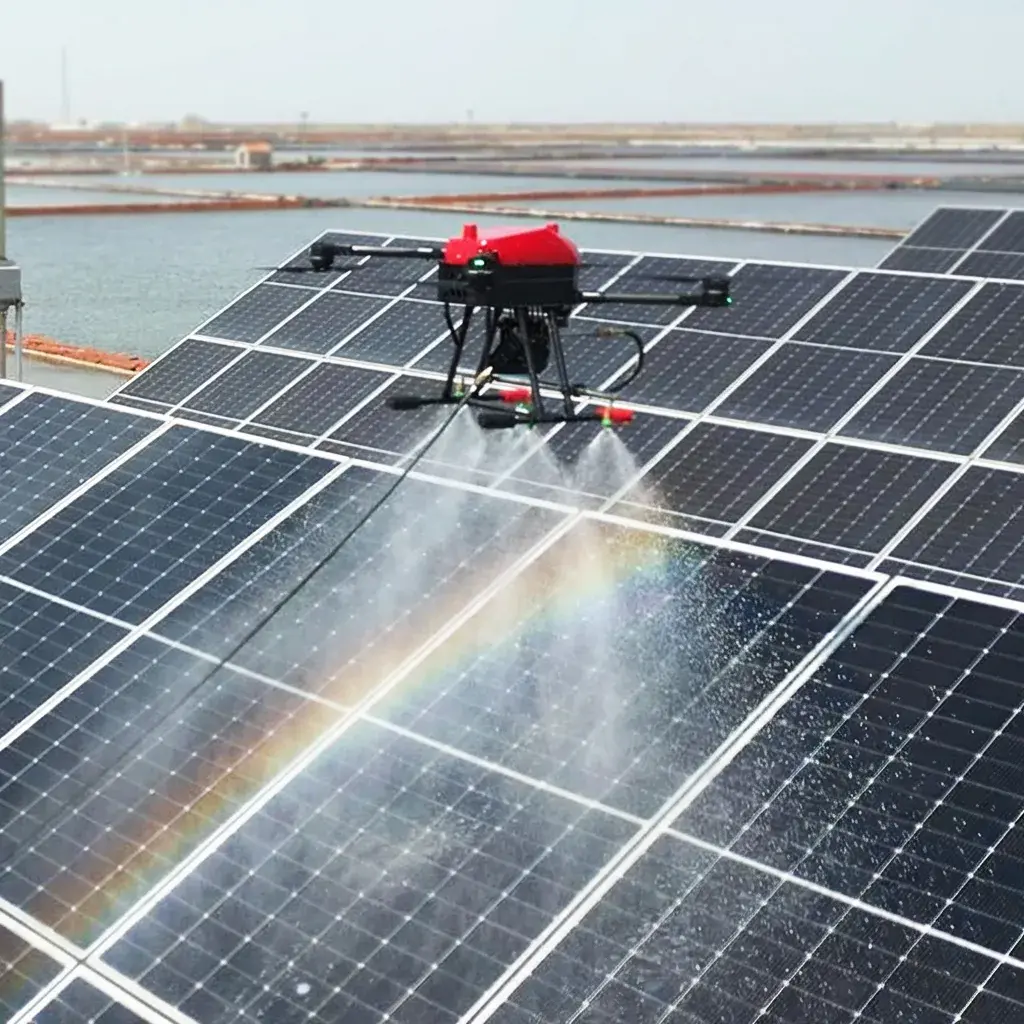
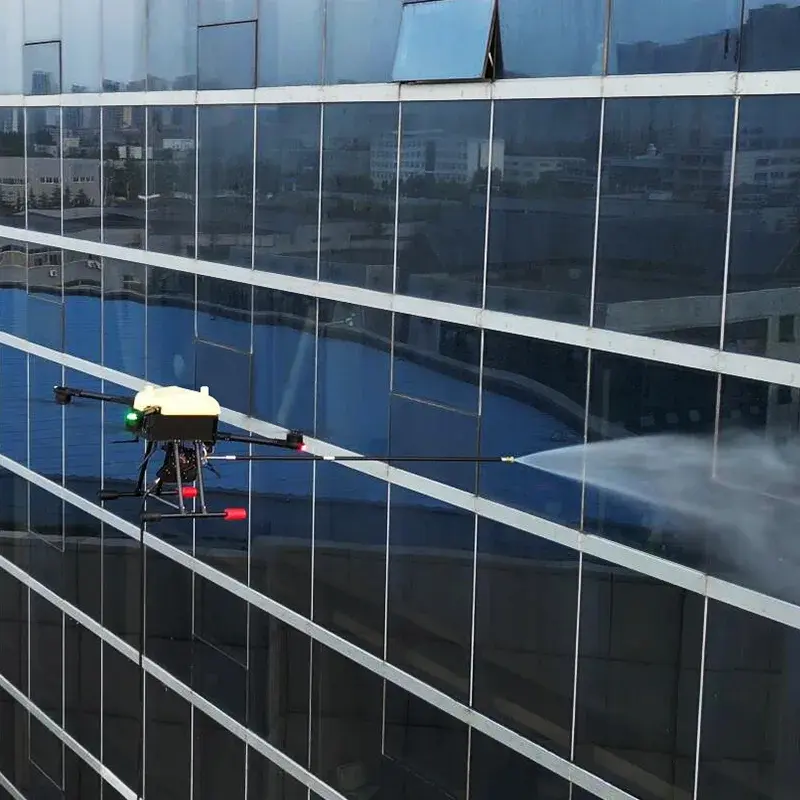
We clean photovoltaic plants, industrial facilities and hard-to-reach facades through zoned, site-specific interventions. Less exposure at height, less auxiliary access equipment where feasible and a result that can be documented.

Every project is subject to a technical, operational and feasibility assessment.

01Less exposure at height
02Reverse-osmosis water and adapted methods
03Zoned intervention and final records
Barcelona · Catalonia
Priority service · Photovoltaic plants

More than 20%: the potential cost of letting soiling build up.

This figure was observed in a Málaga case study during prolonged accumulation and is not a forecast for every plant. Dust, pollen, sand and other deposits reduce the light reaching the module; actual impact must be checked against site data.

>20%
Production loss observed during prolonged dry periods in a Málaga case study.Average daily loss in the same study was around 4.4%. These are references from the analysed case, not a guaranteed recovery for every plant.Málaga case · IEA PVPS Task 13, 2022
4–7%
Average global energy loss associated with PV soiling. The figure for an individual plant may be lower or higher.Source: IEA PVPS, 2025
  • Less foot traffic on roofs and rows
  • Coverage planned by zone
  • Less auxiliary equipment where feasible
  • Cleaning and documentation in one project
View Solar Care
Illustrative sequence · The procedure is adapted to each site
01

Reverse-osmosis water

We control cleaning and rinsing water quality to reduce the risk of mineral deposits.

02

Protective coating

After cleaning, we can apply a treatment compatible with the module, technical requirements and warranty conditions.

03

Specific cleaning product

When soiling requires it, we define the product, local test, rinsing and runoff management in advance.

Operational advantages

Less setup. Less height. More control of the work.

The drone is not the goal; it is the tool. We use it where it can simplify access, structure the intervention and reduce disruption around the asset.

01

Access to complex areas

We assess facades, roofs and facilities where access shapes maintenance.

02

Less exposure at height

Where feasible, part of the work can be carried out from the ground.

03

Less auxiliary equipment

The intervention may require less setup and occupy less space around the asset.

04

Documented service

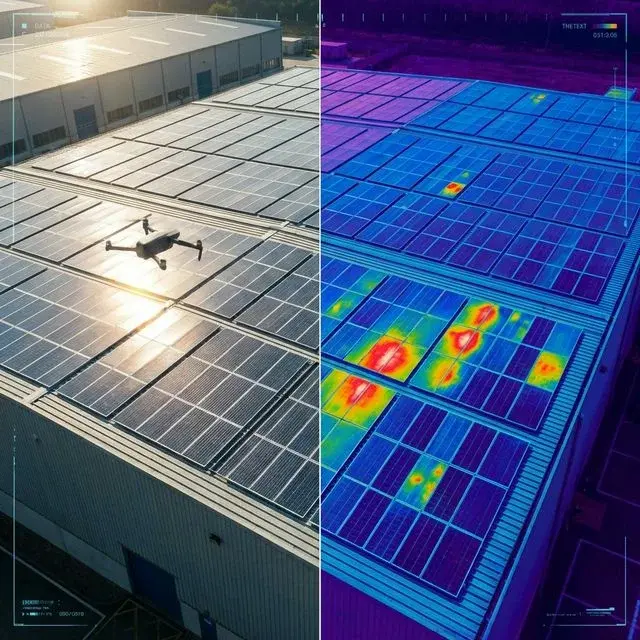
Visual records, inspection and a maintenance recommendation can be integrated into the scope.

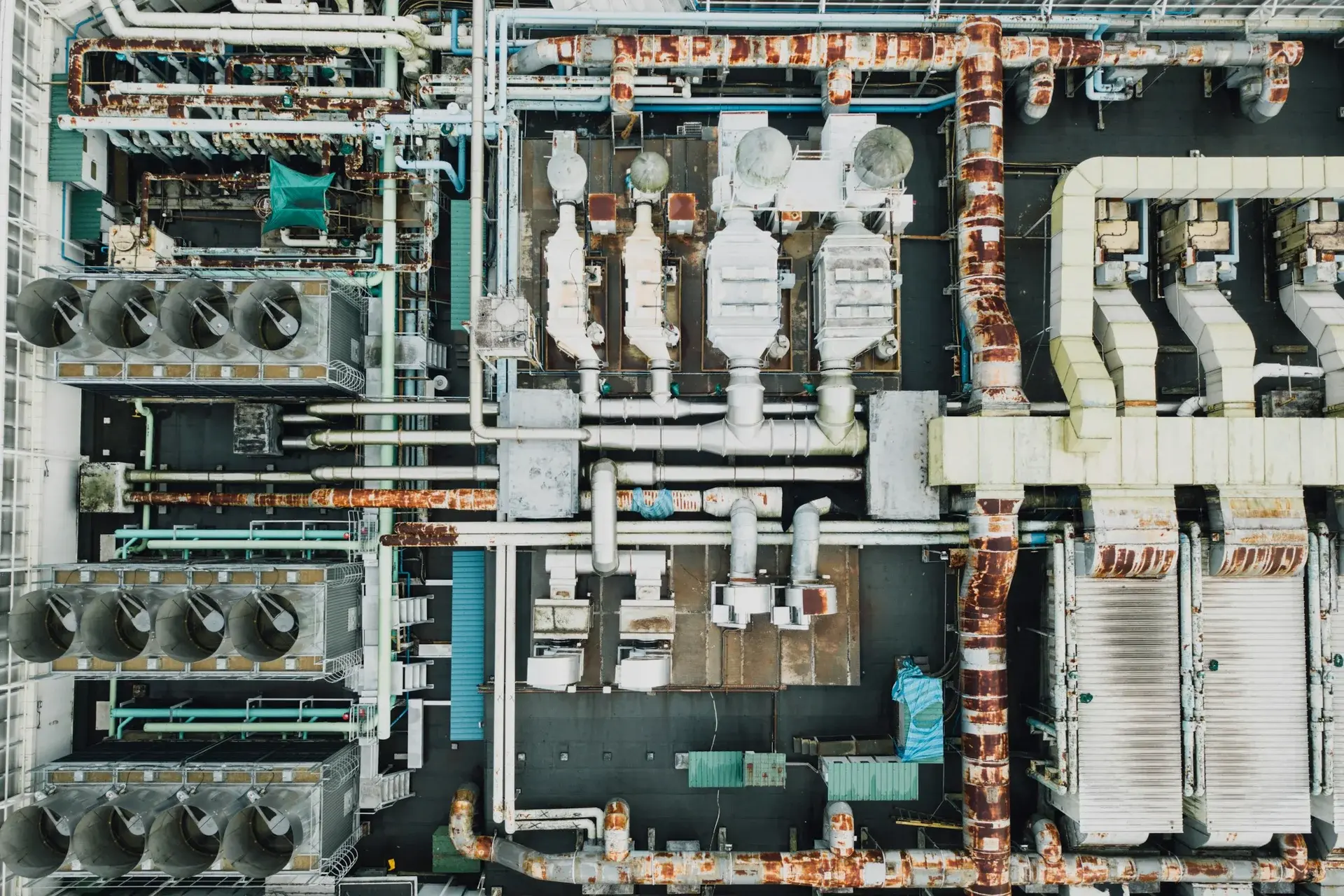
Aerial view of pipes, ventilation and equipment at an industrial facility
Industrial facility · contextual image
Industrial cleaning

The facility gets cleaned. The operation keeps moving.

We assess roofs, skylights, warehouses, facades, canopies and elevated structures. Work is organised by zone and operating window to reduce interference with production, logistics, access and internal circulation.

  • Less exposure at height where feasible
  • Lower occupation and access setup
  • Phased execution
  • Local test and final record
View industrial cleaning
How we work

First we understand. Then we intervene.

A good intervention starts before take-off. We study the asset, access and constraints to define a realistic scope, reduce surprises and choose the right method.

View details
Facade preparation and operation
Setup + operation

A good intervention starts before take-off

We prepare the equipment, check the water supply and coordinate the work zone before starting. The final method follows an assessment of the surface, surroundings and site activity.

01

Understand

We review location, material, height, geometry, soiling, access and the service objective.

02

Validate

We check surface compatibility, surroundings, available resources and operational feasibility.

03

Define

We select the method, configuration and, where needed, a localised test before closing the scope.

04

Plan

We agree the perimeter, access, schedule, protection and coordination with site activity.

05

Intervene

We execute the work and adapt the operation to the actual conditions of the day.

06

Document

We deliver the agreed record and recommend a maintenance interval where it adds value.

Adapted method

The method adapts to the surface. Not the other way around.

Configuration, water, distance and procedure are adjusted after reviewing the material and surroundings. The aim is to act with care, protect the surface and coordinate with asset activity.

  • Configuration adapted to the work
  • Local test where appropriate
  • Visual record as agreed
Technology and process
JTC10 aerial-cleaning equipment in red
Technical cleaning configuration
JTC10 aerial-cleaning equipment in yellow
Equipment adapted to the intervention
Before you start

What you need to assess the service

View all questions
01What advantages can a drone provide?

Where feasible, it can reduce work at height, auxiliary access equipment, preparation time and occupation of the surroundings. The actual benefit depends on the asset.

02Can you work on any surface?

No. We review material, condition, geometry, dirt and surroundings before confirming the method and configuration.

03Do you need permits or to stop activity?

It depends on location, airspace, work zone and type of operation. We assess and coordinate this to minimise disruption.

04How is the quote calculated?

We assess area, height, geometry, dirt, material, access, location, available resources, restrictions and frequency.

Next step

Show us the challenge. We’ll tell you whether a drone fits.

Send a few photographs, the location and a short explanation. We will review access, constraints and scope, then explain whether the service is feasible and what comes next.

  • Information review
  • Initial contact
  • Feasibility assessment
  • Visit or test where needed
  • Quote
01 / Contact

Tell us what you need to solve

Fields marked with * are required so we can respond.

Controller: Jan Sherzad Colet. Purpose: respond to the enquiry, assess feasibility and prepare a quote. Basis: pre-contractual steps requested by the person concerned. Contact: drone@mandarina.cat. This form does not subscribe you to marketing.

We will review the information before confirming feasibility.

Request assessmentChat on WhatsApp