Mandarina Solar Care · PV plants

Soiling should not decide how much your plant produces

We remove dust, pollen and deposits using reverse-osmosis water, planned coverage and visual records. Where compatible, the intervention can be completed with a protective treatment adapted to the module.

PV plantsO&M portfoliosSolar rooftopsThermography
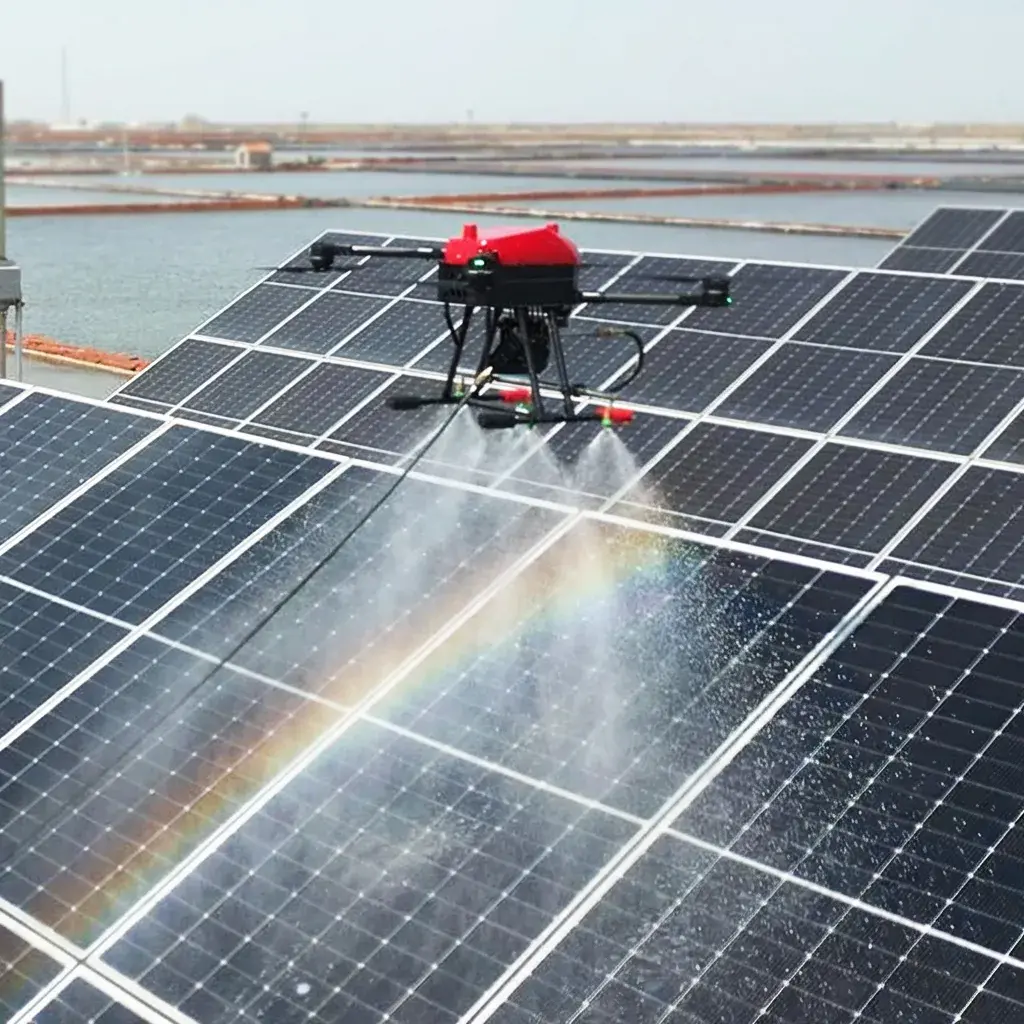
Drone cleaning demonstration on solar panels
Aerial solar-panel cleaning
01

More than 20% during prolonged dry periods

A Málaga case study cited by IEA PVPS recorded production losses above 20% during prolonged dry accumulation periods and an average daily loss of around 4.4%. As a global reference, IEA PVPS estimates average energy loss from PV soiling at 4–7%. Dust, pollen, sand and other deposits reduce the light reaching the module, but the impact on a specific plant may be lower or higher and should be measured using comparable site data.

02

Advantages of drone cleaning

Across large plants, solar rooftops and awkward areas, drones make it possible to organise work by row or sector while reducing some foot traffic around modules.

  • Less direct exposure on roofs and rows
  • Ordered coverage by zone
  • Less auxiliary access equipment where feasible
  • Coordination with production, maintenance and access
  • Cleaning, recording and inspection within one project
03

Reverse-osmosis water and post-cleaning protection

We use reverse-osmosis water to control cleaning and rinsing quality and reduce mineral deposits. After cleaning, a protective coating can be included once compatibility with the module, technical requirements and warranty conditions has been verified.

04

Products defined for the installation

The proposal specifies what will be used, how it will be applied and what maintenance it requires. No product is assumed compatible without reviewing the module and soiling first.

  • Reverse-osmosis water for cleaning and rinsing
  • Protective treatment with documented compatibility
  • Specific product only when the soiling requires it
  • Local test, rinsing and runoff plan before scaling up
05

Solar Care: one coordinated scope

The service is configured around the asset, from one-off cleaning to a more complete review cycle.

  • Initial visual review
  • Thermography when the objective and capture conditions are suitable
  • Cleaning with reverse-osmosis water
  • Protective application when included and validated
  • Post-cleaning visual record and issue log as agreed
06

For plants and O&M portfolios

We work with ground-mounted plants, industrial and logistics rooftops, collective self-consumption installations and portfolios managed by O&M teams. Module layout, slopes, obstacles, access, water supply and runoff are reviewed in advance.

07

From one intervention to a portfolio plan

We can prepare a single intervention, a maintenance frequency or a multi-site proposal. Portfolio assets are grouped by type, priority and constraints to make planning easier.

FAQ

Useful things to know

01How much does production increase after cleaning?

Cleaning removes one loss factor, but the result depends on soiling, irradiance, design and plant condition. We only quantify improvement using comparable data from the installation.

02Do you use reverse-osmosis water?

Yes. It helps control cleaning and rinsing water quality and reduce mineral deposits. Supply and logistics are defined for each site.

03Is the protective coating compatible with every panel?

Compatibility is never assumed. We check the module, finish and warranty requirements before including it. If compatibility is not documented, we do not apply it.

04Can an active rooftop be cleaned?

In some cases, yes, with prior coordination and a controlled work zone. Feasibility is confirmed after reviewing the site and its operation.

05Is a report included?

A visual record and issue report can be included depending on the agreed scope. This is stated clearly in the quote.

06Can cleaning and thermography be combined?

Yes, when the objective, capture conditions and planning allow it. Sequence and deliverables are agreed beforehand.

07Where does the water come from and how is runoff managed?

We agree the supply point and reverse-osmosis water logistics, then define rinsing and runoff management for the installation before work begins.

Initial assessment

Could a drone fit your project?

Send the location and a few images. We will explain what needs checking before preparing a proposal.

Request a site assessment and quote
Request assessmentChat on WhatsApp