More visibility before physical access
A drone can observe facades, roofs and PV modules from difficult angles and create an initial overview of the asset. Maintenance teams can then focus time and resources on areas that need closer review.
We turn thermal and visual imagery from difficult areas into structured information that helps identify signs, prioritise reviews and focus resources where they are most useful.

A drone can observe facades, roofs and PV modules from difficult angles and create an initial overview of the asset. Maintenance teams can then focus time and resources on areas that need closer review.
We document visible signs such as cracks, apparent moisture, deteriorated joints, displaced elements or relevant changes. Capture is organised by zone so each image retains its context.
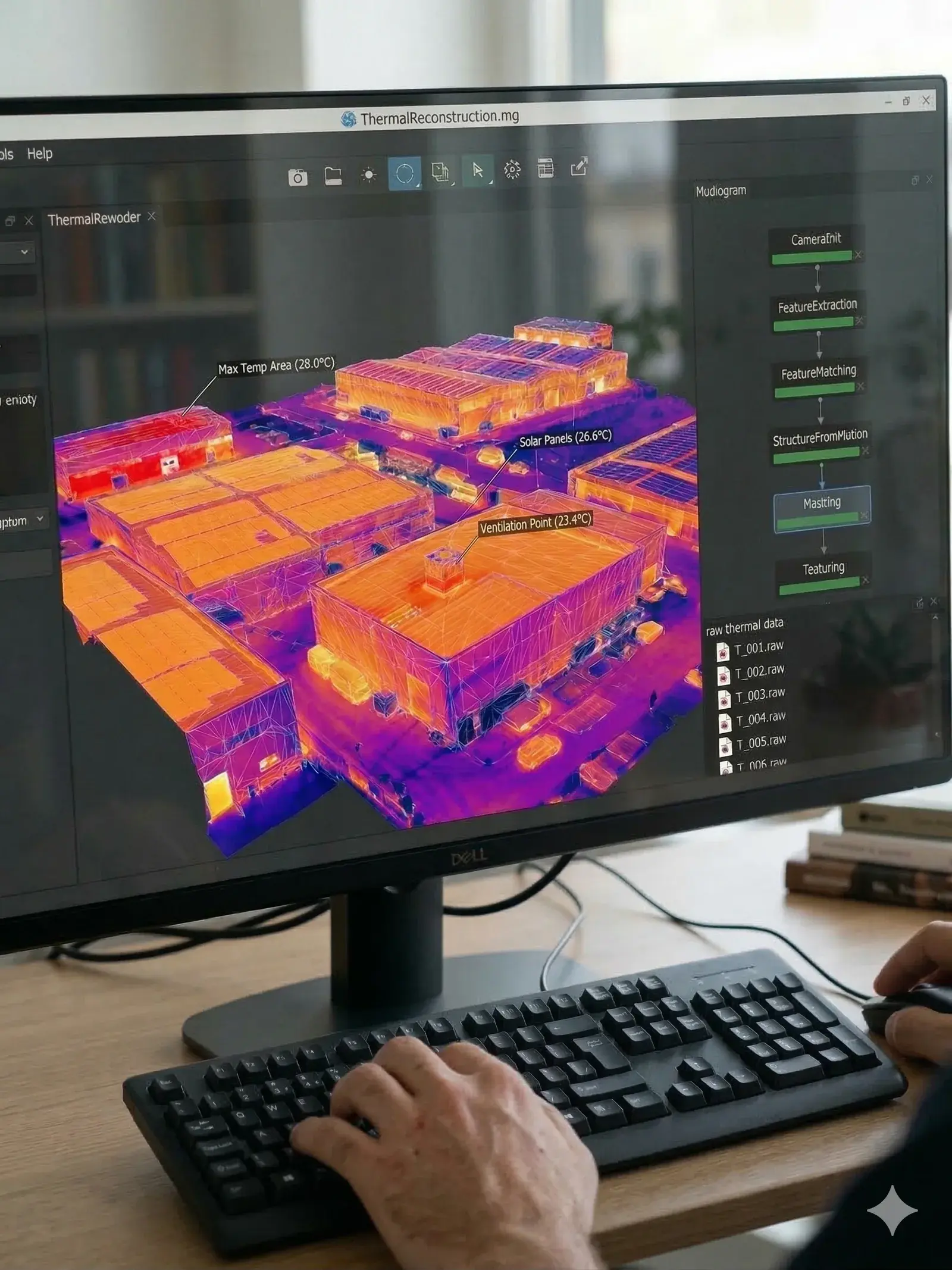
When the objective and conditions are suitable, thermal capture can reveal patterns or anomalies worth reviewing. We agree what is being sought, how evidence will be captured and how it will be presented.
Coverage, viewing angles and asset references are planned to support later review. The scope may include a capture index, selected evidence, approximate location and agreed classification.
The format is defined before the flight so it supports a specific decision: schedule a review, prepare a repair, compare areas or preserve a condition baseline. Visual observations are kept separate from diagnoses reserved for qualified professionals.
Not always. It identifies possible thermal anomalies that must be interpreted and, where appropriate, verified through electrical checks.
The delivery package is agreed beforehand and may contain selected images, a complete record or a report depending on the objective.
No. It can document signs and help prioritise work, but structural assessment belongs to a qualified professional and may require other checks.
Send the location and a few images. We will explain what needs checking before preparing a proposal.